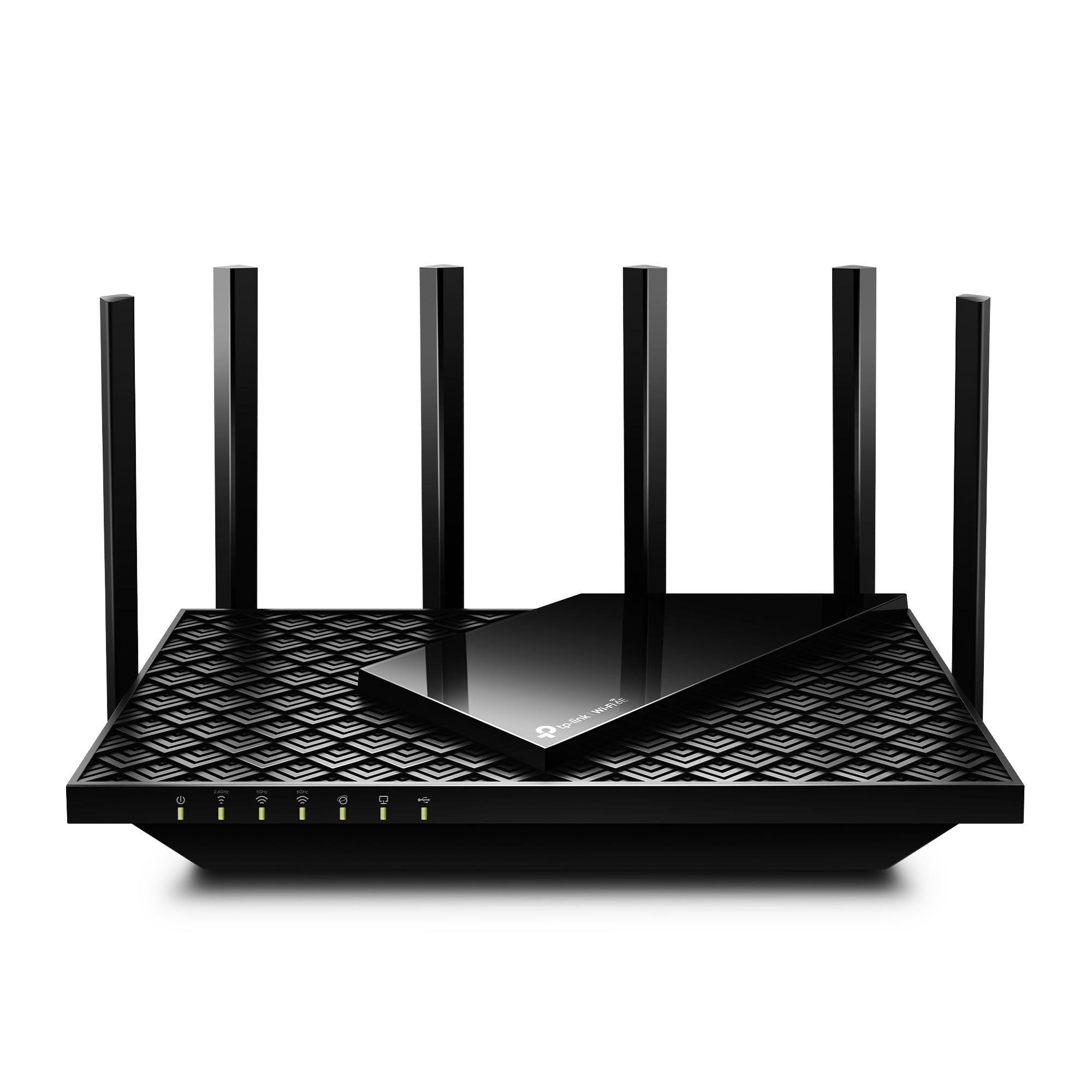
This TP Link AXE5400 review looks at the Archer AXE75, a tri-band Wi-Fi 6E router built for homes balancing streaming, gaming, and many connected devices.
Archer AXE75 Review Summary
The quick verdict
5,000+ ratings
Read Amazon ReviewsTP-Link Archer AXE75
A tri-band Wi-Fi 6E router for households that want a 6 GHz band, device capacity features, and VPN options.
- Tri-band Wi-Fi 6E with 6 GHz, 5 GHz, and 2.4 GHz bands.
- Up to 5400 Mbps combined wireless rate across the three bands.
- OFDMA and true tri-band operation for simultaneous device transmissions.
- A 1.0 GHz dual-core CPU and 512 MB of high-speed memory.

Pros
- Adds a 6 GHz band for Wi-Fi 6E devices.
- Tri-band and OFDMA features are aimed at handling concurrent device traffic.
Consider before buying
- Check whether your devices can use the 6 GHz band before choosing this router, since its benefits depend on device compatibility.
- Most internet providers require a separate modem, so this router may not be a complete replacement for existing gateway equipment.
Read the full review summary
The Archer AXE75’s central draw is its dedicated 6 GHz band alongside 5 GHz and 2.4 GHz, with an aggregate advertised wireless rate of up to 5400 Mbps.
For a home with compatible Wi-Fi 6E devices, that extra band gives more bandwidth options; actual throughput will still depend on devices, layout, interference, and internet service.
It fits buyers who want tri-band connectivity, OFDMA for handling simultaneous transmissions, built-in VPN server and client support, and basic HomeShield tools in one router.
Its main practical caveat is that the router does not replace the modem required by most internet providers, so check the existing setup before ordering.
The buying factors
Archer AXE75 Scorecard
Editorial scores reflect listed features and buyer fit; they are not laboratory measurements or customer ratings.
Tri-band flexibility
Three bands, including 6 GHz, give compatible devices an additional spectrum option and make this the defining reason to consider the router.
Wireless rate potential
The combined rate reaches up to 5400 Mbps on paper, split across three bands; this is a link-rate ceiling rather than a promise of real-world internet speed.
Multi-device features
OFDMA and true tri-band operation are useful tools for serving devices concurrently, though the stated capacity increase does not establish performance in every home.
Network management
The router combines VPN server and client modes with basic network security, IoT identification, parental controls, QoS, and usage reports.
Whole-home expansion
OneMesh support gives buyers a path to extend coverage with a compatible TP-Link extender, but mesh expansion depends on adding that separate device.
Setup compatibility
It works with major internet providers, but most connections still require a separate modem, an extra equipment check for first-time setup.
Key Features and Specifications of Archer AXE75
- Tri-band Wi-Fi 6E with 6 GHz, 5 GHz, and 2.4 GHz bands.
- Up to 5400 Mbps combined wireless rate across the three bands.
- OFDMA and true tri-band operation for simultaneous device transmissions.
- A 1.0 GHz dual-core CPU and 512 MB of high-speed memory.
- VPN server and client support for OpenVPN, PPTP, and L2TP.
- OneMesh compatibility with a TP-Link OneMesh extender.
- HomeShield includes basic security, parental controls, QoS, and network reports.
Pros and Cons of Archer AXE75
Pros
- Adds a 6 GHz band for Wi-Fi 6E devices.
- Tri-band and OFDMA features are aimed at handling concurrent device traffic.
- Includes both VPN server and VPN client functions.
- Can join a OneMesh setup with a compatible TP-Link extender.
- Basic HomeShield tools cover network security and parental controls.
Consider before buying
- Check whether your devices can use the 6 GHz band before choosing this router, since its benefits depend on device compatibility.
- Most internet providers require a separate modem, so this router may not be a complete replacement for existing gateway equipment.
- OneMesh whole-home expansion depends on adding a compatible TP-Link extender.
Who Should Buy Archer AXE75?
Good fit
Choose the Archer AXE75 if your household has Wi-Fi 6E clients and you want a tri-band router with a dedicated 6 GHz option.
Its three-band design and OFDMA features suit homes where multiple devices may be active at once.
It also makes sense for buyers who value VPN functions and built-in basic network controls.
Check whether your current modem can stay in place, and plan on a compatible extender if you want to use OneMesh beyond the router’s reach.
Who should skip it
Skip it if you need an all-in-one modem and router, since most internet providers require a separate modem for service.
It is also a weaker fit if none of your devices use Wi-Fi 6E and you have no near-term plan to add compatible clients; the key 6 GHz feature would have little relevance to that setup.
Archer AXE75 Review Analysis
What the 6 GHz band changes
The 6 GHz band is the clearest differentiator for a compatible Wi-Fi 6E home, adding another band alongside 5 GHz and 2.4 GHz.
The practical upside is more spectrum choice for supported clients; it does not turn a provider’s internet plan or a client’s radio into a faster one by itself.
Capacity and concurrent traffic
OFDMA and tri-band operation target homes with devices sending data at the same time.
That makes the AXE75 a plausible fit for mixed streaming, gaming, and browsing, while the actual experience depends on the home environment and connected equipment.
Security, controls, and expansion
VPN server and client options can help buyers who want remote-access or VPN-client functions at the router. HomeShield adds baseline security and parental controls, while OneMesh offers an expansion route if a compatible TP-Link extender is added.
Plan for the modem
The AXE75 is a router, not a modem replacement for most provider setups.
Buyers should confirm they already have a compatible modem or are prepared to keep or obtain one before making it the center of a home network.
Alternatives to Archer AXE75
Computer Routers alternative
1,000+ ratings
Read Amazon ReviewsTP-Link Archer BE230
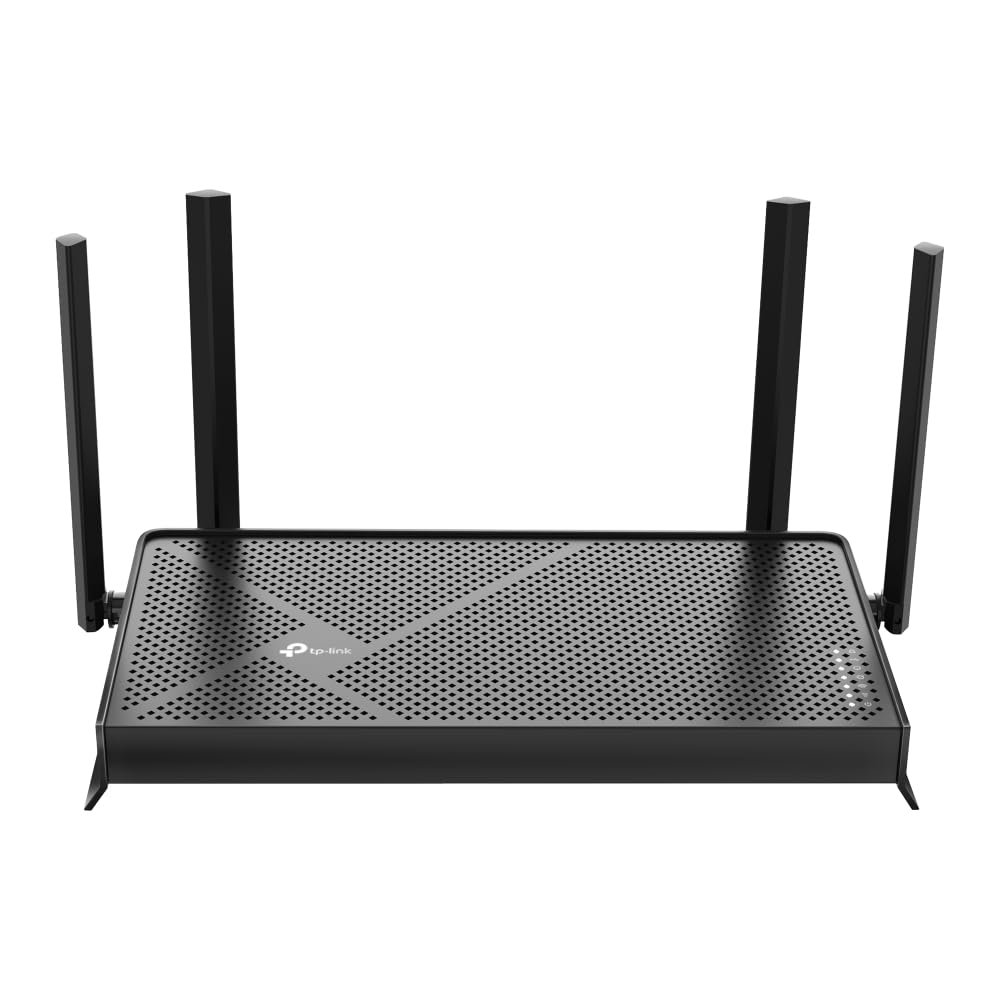
Choose the BE230 if Wi-Fi 7 features and two 2.5G ports matter more to you; choose the AXE75 if tri-band operation and a 6 GHz band are priorities.
- Archer BE230 is a dual-band Wi-Fi 7 router with Multi-Link Operation and two 2.5G ports; its dual-band design does not support 6 GHz.
- Archer AXE75 brings tri-band Wi-Fi 6E and a 6 GHz band, with up to 5400 Mbps combined wireless rate.
Computer Routers alternative
500+ ratings
Read Amazon ReviewsTenda RX12 Pro V3.0
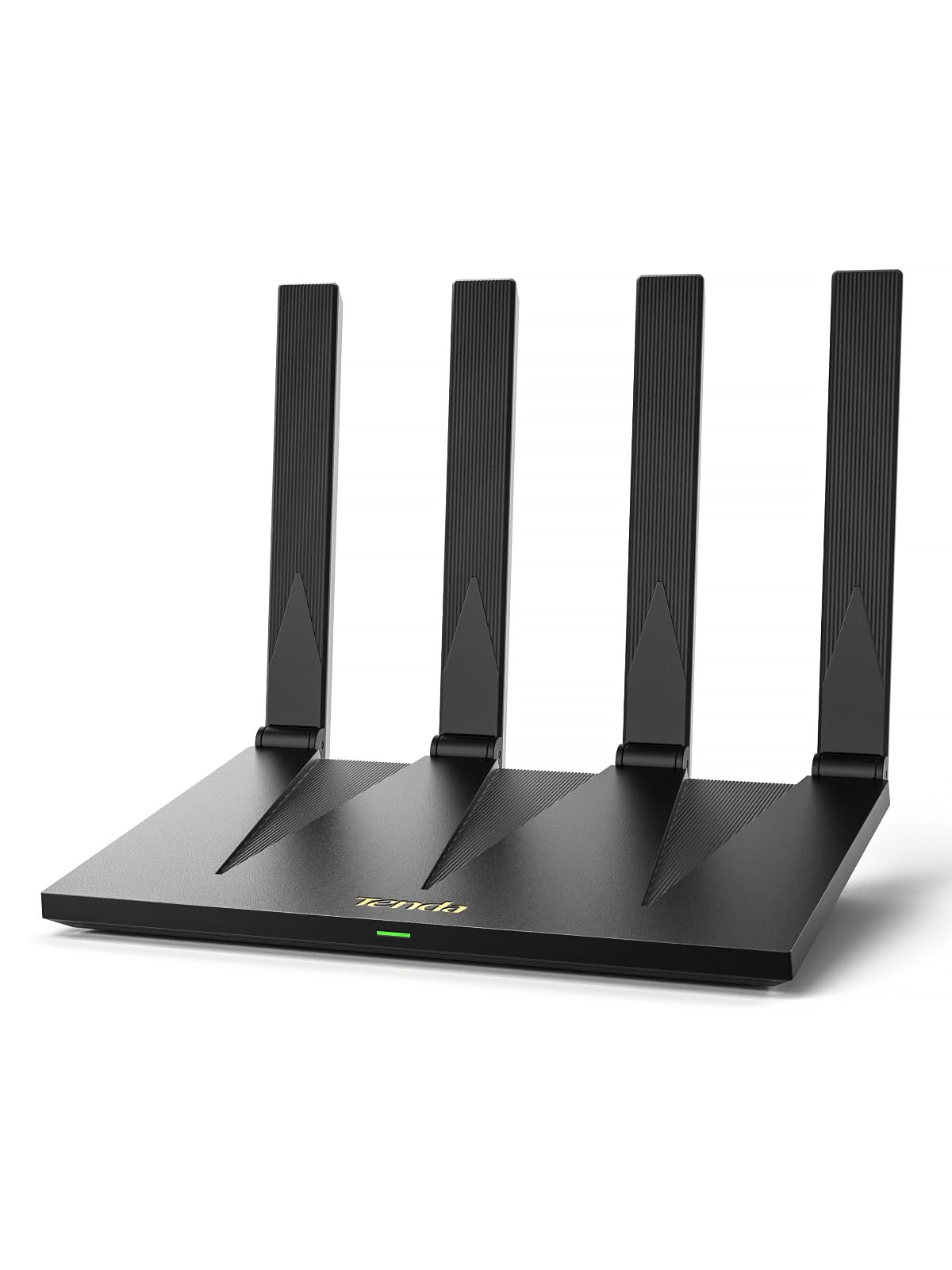
Choose the Tenda if dual-band Wi-Fi 6 and four Gigabit ports suit your setup; choose the AXE75 if the extra 6 GHz band and tri-band layout are the reasons you are upgrading.
- Tenda RX12 Pro V3.0 is a dual-band Wi-Fi 6 router with speeds up to 2402 Mbps on 5 GHz and 574 Mbps on 2.4 GHz, plus four full Gigabit ports.
- Archer AXE75 offers three Wi-Fi bands, including 6 GHz, and an aggregate rate up to 5400 Mbps.
Is Archer AXE75 Worth It?
The TP-Link Archer AXE75 is worth considering when you have Wi-Fi 6E devices and want a tri-band router with 6 GHz, concurrent-device features, VPN support, and basic network controls.
Its strongest case is the combination of those capabilities in one router.
Before buying, make sure your clients can use Wi-Fi 6E and account for the separate modem most provider setups need.
If those conditions suit your network, the AXE75’s three bands and OneMesh expansion option make it a well-equipped choice for a connected home.
Your review at a glance
5,000+ ratings
Read Amazon ReviewsTP-Link Archer AXE75
A tri-band Wi-Fi 6E router for households that want a 6 GHz band, device capacity features, and VPN options.
- Tri-band Wi-Fi 6E with 6 GHz, 5 GHz, and 2.4 GHz bands.
- Up to 5400 Mbps combined wireless rate across the three bands.
- OFDMA and true tri-band operation for simultaneous device transmissions.
- A 1.0 GHz dual-core CPU and 512 MB of high-speed memory.